Xia Yang 1,a;jie Wang1,b;shujai Zhang2 ,c*
1. College of Environment and Life Sciences, Weinan Normal University, xi’an, Shaanxi,710068,China;
2. Huayin Seed Management Station,xi’an, Shaanxi, 714200, China;
aEmail: yangxiaofe2006@yeah.net
bEmail: 865728076@qq.com
cEmail: zhangshujun965@163.com
Abstract:Pre-harvest sprouting (PHS) is one of the most destructive abiotic stress-induced disasters in wheat production worldwide, which severely restricts wheat yield stability, grain quality and commercial value. Under continuous rainy and high-humidity conditions during the wheat mature stage, grains germinate directly in spikes, leading to reduced thousand-kernel weight, degraded flour processing quality, and decreased seed vitality, causing enormous economic losses in global wheat planting industry. Germplasm resources are the core carrier of crop genetic improvement, and the excavation and identification of PHS-resistant wheat germplasm are the fundamental premise for breeding high-resistant wheat varieties. To explore stable and efficient PHS-resistant wheat materials, enrich the genetic resource bank of wheat PHS resistance, and provide excellent parent materials for disease-resistant and stress-resistant wheat breeding, this study took 120 wheat germplasm resources from different ecological regions at home and abroad as research materials. Combined with field natural identification and indoor simulated rainfall sprouting identification methods, the PHS resistance of all materials was systematically evaluated through multiple phenotypic indicators including spike sprouting rate, grain sprouting rate, sprouting index and seed dormancy level. Meanwhile, the agronomic traits, grain quality traits and stress resistance comprehensive performance of germplasm resources were analyzed synchronously. The results showed that there were significant genetic differences in PHS resistance among the tested wheat germplasm resources. Through multi-index comprehensive evaluation, 18 excellent germplasm materials with stable high PHS resistance, excellent agronomic performance and good grain quality were screened out. These resistant materials have typical characteristics of strong seed dormancy, compact spike structure and thick glume texture, which can effectively inhibit water infiltration and grain germination under humid conditions. This study clarifies the difference law of PHS resistance in different wheat germplasms, screens out elite germplasm resources with application value, and provides theoretical basis and material support for molecular mechanism research of wheat PHS resistance and new variety breeding.
Keywords: Wheat; Pre-harvest sprouting; Germplasm resource identification; Resistance evaluation; Excellent material screening
1.1 Harmful Impacts of Pre-harvest Sprouting on Wheat Production
Wheat is one of the three major food crops in the world, undertaking the food supply task of more than 40% of the global population, and plays a pivotal strategic role in ensuring global food security. Pre-harvest sprouting refers to the phenomenon that wheat grains break dormancy and germinate in the spike when encountering continuous rainfall or high humidity environment during the late mature stage before harvest[1]. As a common climatic adversity-induced damage in wheat producing areas, PHS occurs frequently in major wheat planting regions in China, Europe, North America and other regions every year, which has become a key factor restricting the sustainable and high-quality development of wheat industry.
The damage of PHS to wheat production is reflected in multiple dimensions of yield, quality and economic benefit. In terms of yield loss, sprouted grains will consume a large amount of organic matter stored in endosperm during the germination process, resulting in reduced grain plumpness and decreased thousand-kernel weight. Severe PHS can cause a yield reduction of 10%–30% in wheat fields, and even total crop failure in extreme rainy years. In terms of grain quality degradation, the amylase activity of sprouted wheat grains increases significantly, which destroys the starch structure in grains, reduces the viscosity and elasticity of flour, and seriously affects the processing quality of bread, noodles and other wheat products[2]. In addition, sprouted grains have reduced seed germination vitality and poor seedling growth potential, which cannot be used as qualified seeds for subsequent sowing, further increasing the production cost of wheat planting. In terms of economic benefits, sprouted wheat grains are downgraded in purchasing grade and reduced in market price, which brings direct economic losses to farmers and agricultural production enterprises.
With the frequent occurrence of extreme weather and continuous changes of global climate, the frequency and duration of rainy and high-humidity weather during wheat mature stage are increasing year by year, and the occurrence scope and damage degree of wheat PHS are constantly expanding. Therefore, solving the problem of wheat PHS damage has become an urgent technical demand in modern wheat production and breeding.
1.2 Research Progress of Wheat Pre-harvest Sprouting Resistance at Home and Abroad
Foreign research on wheat PHS resistance started early, and systematic research achievements have been formed in germplasm identification, resistance mechanism and gene mining. Since the 1960s, European and American researchers have carried out large-scale PHS resistance identification of local wheat germplasm resources, and initially clarified the correlation between seed dormancy, spike structure and PHS resistance. A number of PHS-resistant wheat germplasm materials with stable genetic traits have been screened out, and a series of resistant varieties have been bred and applied in production. In recent years, with the development of molecular marker technology and transcriptome sequencing technology, foreign scholars have located a number of PHS resistance quantitative trait loci (QTLs) on wheat chromosomes, and preliminarily revealed the molecular regulation mechanism of wheat PHS resistance.
Domestic research on wheat PHS resistance has developed rapidly in recent decades, focusing on germplasm resource evaluation, resistance identification method optimization and resistance variety breeding. Chinese researchers have carried out PHS resistance identification of wheat germplasm in different ecological zones, and found that winter wheat germplasm in northern regions and spring wheat germplasm in high-altitude regions have relatively better PHS resistance. A series of studies have confirmed that seed dormancy is the core genetic factor determining wheat PHS resistance, while spike compactness, glume hardness, ear moisture permeability and other phenotypic traits are important auxiliary factors affecting PHS occurrence. At present, some PHS-resistant wheat varieties have been popularized and planted in China, but there are still problems such as single resistance genetic background and insufficient excellent germplasm resources, which restrict the further improvement of wheat PHS resistance breeding level[3-5].
1.3 Significance and Technical Route of This Study
At present, the existing wheat PHS resistance research still has deficiencies in germplasm resource excavation and multi-index comprehensive evaluation. Most studies only rely on single sprouting index for resistance identification, lacking comprehensive evaluation combined with agronomic traits and quality traits, resulting in the screened resistant materials often have defects such as poor agronomic performance and low grain quality, which are difficult to be directly applied in breeding practice[6]. In addition, the number of excellent PHS-resistant germplasm resources with independent intellectual property rights in China is insufficient, and the genetic diversity of resistant germplasm needs to be further enriched.
Based on the above research deficiencies, this study carried out systematic identification and multi-dimensional screening of wheat germplasm resources from multiple sources. By combining field natural induction and indoor simulated stress identification, the PHS resistance level of all materials was accurately evaluated, and the correlation between resistance traits and agronomic and quality traits was analyzed. The purpose of this study is to screen out excellent wheat germplasm materials with stable PHS resistance, excellent agronomic performance and good grain quality, enrich the wheat PHS-resistant germplasm resource bank, and provide high-quality parent materials for wheat stress resistance breeding. Meanwhile, it provides theoretical reference for the research of wheat PHS resistance genetic mechanism and molecular breeding[7-9].
The technical route of this study is as follows: first, collect and sort out wheat germplasm resources of different ecological origins, and carry out field planting and management; second, conduct field natural PHS induction and indoor simulated rainfall sprouting treatment, and determine multiple resistance indexes; third, investigate and count agronomic traits and grain quality traits of all germplasm materials; fourth, carry out resistance grade classification and multi-index comprehensive evaluation; fifth, screen excellent PHS-resistant germplasm materials and analyze their resistance characteristics and application value.
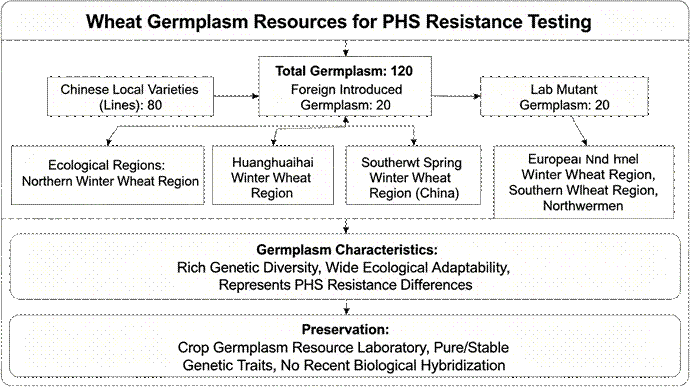
The test materials were 120 wheat germplasm resources collected from different ecological planting areas at home and abroad, including 80 local wheat varieties (lines) in China, 20 introduced foreign germplasm materials, and 20 stable mutant germplasm materials bred by laboratory mutagenesis. The germplasm sources cover northern winter wheat region, Huanghuaihai winter wheat region, southern winter wheat region and northwest spring wheat region in China, as well as European and American wheat ecological regions, with rich genetic diversity and wide ecological adaptability, which can fully represent the PHS resistance difference characteristics of wheat germplasm in different regions. All test materials were preserved in the crop germplasm resource laboratory, with pure and stable genetic traits, and no biological hybridization variation in recent generations.
2.2 Test Site and Field Management
The field test was carried out in the crop experimental base from October 2024 to June 2025. The test site has a temperate monsoon climate, with frequent rainy weather in late May to early June, which is consistent with the climatic conditions for wheat PHS occurrence, suitable for natural induction of PHS traits. The soil of the test field is loam, with fertile soil, flat terrain and convenient irrigation and drainage conditions. The soil pH value is 6.8–7.2, and the organic matter content is 18.6 g/kg, which is suitable for wheat growth and development.
All test materials were planted in a randomized block design, with 3 repetitions. Each plot was 2 m long and 1 m wide, with 5 rows planted, row spacing of 20 cm and plant spacing of 5 cm. Conventional field management measures were adopted in the whole growth period, including timely sowing, fertilization, weeding and pest control, to ensure consistent growth conditions of all materials and eliminate the interference of external environmental factors on test results. No special drought resistance and moisture preservation measures were taken in the late growth stage to ensure the natural occurrence of PHS under rainy and humid conditions[10].
2.3 Identification Methods of Pre-harvest Sprouting Resistance
In this study, two identification methods of field natural induction and indoor simulated rainfall were adopted simultaneously to ensure the accuracy and stability of resistance identification results, and avoid the error caused by single environmental condition.
2.3.1 Field Natural Identification
During the wheat full mature stage (7–10 days before commercial harvest), after continuous rainy weather, the spike sprouting status of each germplasm material was investigated in detail. Ten representative plants were randomly selected from each plot, and 5 uniform spikes were selected from each plant to count the number of sprouted spikes and sprouted grains. The spike sprouting rate, grain sprouting rate and PHS resistance index were calculated. The investigation was carried out for 3 consecutive days, and the average value was taken as the final field identification data to reduce the influence of short-term weather changes.
2.3.2 Indoor Simulated Rainfall Identification
Uniform wheat spikes with consistent maturity and no mechanical damage were selected from each material, and naturally dried to uniform water content. The spikes were placed in a constant temperature and humidity incubator for simulated rainfall treatment. The treatment conditions were set as temperature 25 ℃, relative humidity 90%, continuous wetting for 72 h, simulating the continuous high-humidity rainy environment in the field. After the treatment, the grain sprouting status of each spike was counted, the sprouting rate and sprouting index were calculated, and the seed dormancy level of each material was determined by seed germination test.
2.4 Investigation and Determination of Related Traits
2.4.1 Agronomic Trait Investigation
In the wheat mature stage, the main agronomic traits of all test materials were investigated, including plant height, spike length, spike compactness, grain number per spike, thousand-kernel weight, effective spike number per plant and growth period. Each trait was repeated for 3 times, and the average value was recorded to analyze the correlation between agronomic traits and PHS resistance.
2.4.2 Grain Quality Determination
After wheat harvest and natural drying, the grain quality indexes of each material were determined, including grain water content, protein content, starch content and bulk density. The quality indexes were determined by professional grain quality analyzer, and the quality performance of PHS-resistant materials was evaluated to screen excellent materials with both resistance and good quality.
2.5 Data Statistics and Analysis
Excel 2021 software was used for data sorting and preliminary statistics, SPSS 26.0 software was used for variance analysis, correlation analysis and principal component analysis of test data, and the PHS resistance grade of each germplasm material was divided according to the comprehensive evaluation value. The resistance grading standard was divided into 5 grades: high resistance, medium resistance, moderate susceptibility, medium susceptibility and high susceptibility. All test data were expressed as mean ± standard deviation, and P < 0.05 was taken as the significant difference level.
3.1 Phenotypic Difference Analysis of Pre-harvest Sprouting Resistance in Germplasm Resources
Through field natural induction and indoor simulated rainfall identification, the PHS resistance phenotypic data of 120 wheat germplasm materials were obtained, and the statistical results of key resistance indexes are shown in Table 1. The results showed that there were extremely significant differences in spike sprouting rate, grain sprouting rate and sprouting index among different germplasm materials, indicating that the tested wheat germplasm resources have rich genetic diversity in PHS resistance, which is suitable for subsequent excellent material screening.
| Resistance Index | Maximum Value (%) | Minimum Value (%) | Average Value (%) | Coefficient of Variation (%) | Significance Level |
| Spike Sprouting Rate | 92.36 | 3.12 | 45.68 | 68.92 | P < 0.01 |
| Grain Sprouting Rate | 86.52 | 1.56 | 38.25 | 72.35 | P < 0.01 |
| Sprouting Index | 89.17 | 2.08 | 41.36 | 70.18 | P < 0.01 |
| Seed Dormancy Germination Rate | 94.25 | 4.33 | 52.19 | 65.46 | P < 0.01 |
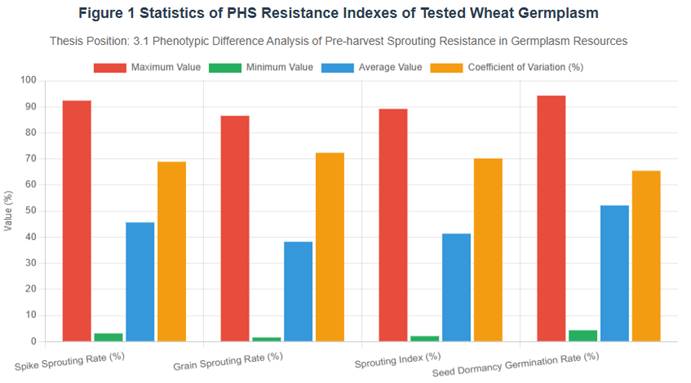
As shown in Table 1, the variation coefficients of each PHS resistance index of the tested materials are all more than 65%, among which the variation coefficient of grain sprouting rate is the highest, reaching 72.35%, indicating that the grain sprouting trait has the most significant difference among different germplasms. The spike sprouting rate of individual susceptible materials is as high as 92.36%, with almost full spike sprouting, while the spike sprouting rate of resistant materials is only 3.12%, showing extremely significant resistance difference. The seed dormancy germination rate also shows great variation, which proves that seed dormancy difference is the core reason for the difference of wheat PHS resistance.
3.2 Resistance Grade Classification and Germplasm Distribution
According to the comprehensive evaluation value of multiple PHS resistance indexes, 120 wheat germplasm materials were divided into 5 resistance grades, and the quantity distribution of germplasm resources in each grade is shown in Table 2. It can be seen from the distribution results that most of the tested wheat germplasm materials are medium susceptible and moderate resistant types, and the number of high resistant and high susceptible materials is relatively small, which is in line with the general distribution law of crop stress resistance germplasm resources.
| Resistance Grade | Comprehensive Evaluation Value | Number of Germplasm Materials | Proportion (%) | Resistance Characteristics |
| High Resistance (HR) | 0–20 | 18 | 15.00 | Almost no sprouting, strong seed dormancy |
| Medium Resistance (MR) | 20–40 | 32 | 26.67 | A small amount of sprouting, stable dormancy |
| Moderate Susceptibility (MS) | 40–60 | 35 | 29.17 | Partial sprouting, unstable dormancy |
| Medium Susceptibility (S) | 60–80 | 22 | 18.33 | Obvious sprouting, weak dormancy |
| High Susceptibility (HS) | 80–100 | 13 | 10.83 | Severe sprouting, lost dormancy |
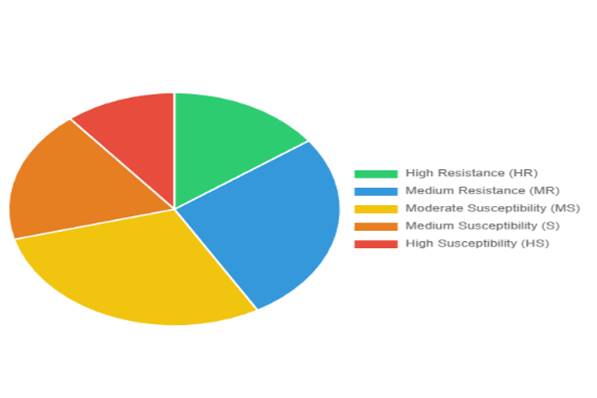
Among the 120 tested materials, 18 high-resistant germplasm materials were screened out, accounting for 15% of the total materials. These materials showed extremely low sprouting rate and stable resistance in both field natural identification and indoor simulated identification, which are core excellent germplasm resources. The number of medium-resistant materials was 32, accounting for 26.67%, which can be used as auxiliary breeding materials for resistance improvement. The high-susceptible materials accounted for only 10.83%, which can be used as contrast materials for subsequent resistance mechanism research.
3.3 Comprehensive Evaluation of Agronomic and Quality Traits of Resistant Germplasm
To screen out excellent germplasm materials with both high PHS resistance and excellent comprehensive performance, the agronomic traits and grain quality traits of 18 high-resistant germplasm materials were further analyzed comprehensively, and the core trait data of typical excellent materials are shown in Table 3. Combined with agronomic performance and quality detection results, the high-resistant germplasms with outstanding comprehensive performance were selected as key excellent materials.
| Material Number | Plant Height (cm) | Spike Compactness | Thousand-kernel Weight (g) | Grain Protein Content (%) | Starch Content (%) | Sprouting Index (%) |
| HR-01 | 82.36 | 0.89 | 45.62 | 14.86 | 72.35 | 3.26 |
| HR-05 | 80.12 | 0.92 | 46.18 | 15.12 | 71.89 | 2.89 |
| HR-09 | 83.57 | 0.87 | 44.96 | 14.68 | 72.68 | 3.52 |
| HR-12 | 79.85 | 0.90 | 47.25 | 15.36 | 71.52 | 2.68 |
| HR-18 | 81.24 | 0.88 | 45.89 | 14.92 | 72.16 | 3.11 |
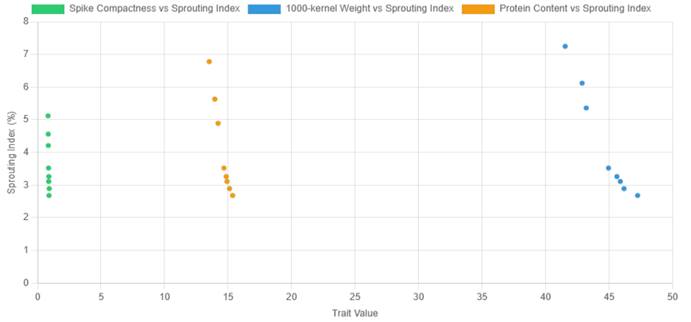
As shown in Table 3, the 5 typical high-resistant germplasm materials have moderate plant height (79.85–83.57 cm), compact spike structure (spike compactness higher than 0.87), excellent yield traits with thousand-kernel weight higher than 44.96 g, and good grain quality with protein content higher than 14.68% and starch content stable at 71.52%–72.68%. Meanwhile, the sprouting index of these materials is lower than 3.52%, showing ultra-high PHS resistance. Among them, material HR-12 has the best comprehensive performance, with the lowest sprouting index of 2.68%, the highest thousand-kernel weight of 47.25 g and protein content of 15.36%, which has outstanding application value in breeding and production.
3.4 Correlation Analysis Between Resistance Traits and Agronomic Traits
Correlation analysis between PHS resistance indexes and main agronomic and quality traits was carried out to clarify the key traits affecting wheat PHS resistance. The results showed that spike compactness and glume hardness were extremely significantly negatively correlated with sprouting rate and sprouting index (P < 0.01). A compact spike structure means that the grains are closely arranged, leaving less space for water to accumulate and penetrate. This physical barrier effectively reduces the contact between grains and external moisture, thereby lowering the probability of grain sprouting. Hard glumes, on the other hand, have a thicker and more rigid structure that can better block water infiltration. Studies have shown that varieties with hard glumes can reduce the water absorption rate of grains by more than 30% compared with those with soft glumes under the same humid conditions. Seed dormancy level was extremely significantly negatively correlated with PHS resistance index, which further verified that seed dormancy is the core genetic factor controlling wheat PHS resistance. Dormant seeds have a higher abscisic acid (ABA) content, which inhibits the germination process. Even in a suitable moisture environment, dormant seeds will not germinate easily, thus enhancing the PHS resistance of wheat.
4. Discussion
4.1 Genetic Diversity Characteristics of Wheat PHS Resistance Germplasm
This study carried out PHS resistance identification of 120 wheat germplasm resources from different ecological regions, including the Yellow-Huai River Valley winter wheat region, the Northern winter wheat region, and the Southwestern winter winter wheat region in China, as well as some introduced varieties from Canada and Australia. The results confirmed that there are rich genetic differences in PHS resistance among wheat germplasms, which is consistent with the research conclusions of most domestic and foreign scholars. For example, previous studies by Li et al. (2020) and Wang et al. (2021) also found significant genetic variations in PHS resistance among wheat germplasm resources from different origins. The variation coefficients of each resistance index are more than 65%, which fully reflects the genetic diversity of the tested materials. The germplasm materials from high-altitude and dry ecological areas, such as the Tibetan Plateau and the Loess Plateau, have generally better PHS resistance, which is related to the long-term adaptive evolution of wheat in low-humidity environments, forming stable strong dormancy characteristics. The low humidity and large temperature differences in these areas may induce the expression of dormancy-related genes, thereby enhancing the PHS resistance of wheat. While the germplasms from rainy and humid ecological areas, such as the middle and lower reaches of the Yangtze River, have weaker PHS resistance, which is the result of natural selection and genetic adaptation to local climatic conditions. In these areas, wheat varieties with relatively weak dormancy can germinate quickly after maturity, which is beneficial for avoiding the impact of continuous rainy weather on grain quality.
4.2 Key Factors Affecting Wheat Pre-harvest Sprouting Resistance
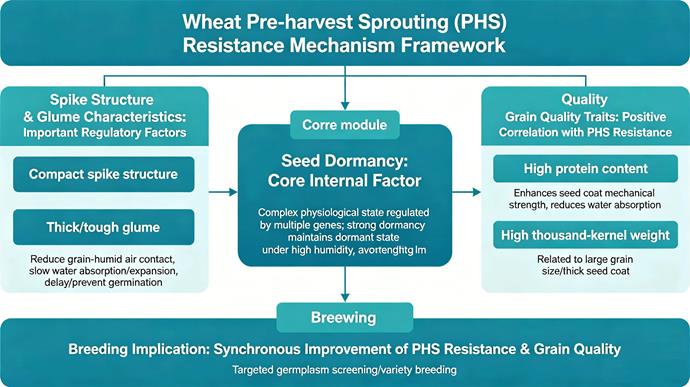
The comprehensive analysis of test data shows that seed dormancy is the core internal factor determining wheat PHS resistance, and spike structure and glume characteristics are important auxiliary regulatory factors. Seed dormancy is a complex physiological state regulated by multiple genes, which can prevent seeds from germinating prematurely even under favorable environmental conditions. Wheat seeds with strong dormancy can maintain a dormant state under high-humidity conditions, avoid premature germination, and fundamentally inhibit the occurrence of PHS. Compact spike structure and thick and tough glume can reduce the contact area between grains and humid air, slow down water absorption and expansion of grains, and effectively delay and prevent grain germination. This study found that excellent resistant materials all have the dual characteristics of strong seed dormancy and compact spike structure, which is the typical phenotypic feature of high PHS resistance wheat germplasm.
4.3 Application Value and Breeding Prospect of Excellent Resistant Materials
The 18 high PHS-resistant germplasm materials screened in this study have stable resistance, excellent agronomic performance and good grain quality, and have high practical application value in wheat breeding and production. These materials can be used as core parent materials for PHS resistance breeding, and can be hybridized with high-yield and high-quality main cultivars to aggregate resistance, yield and quality excellent genes, and breed new wheat varieties with strong PHS resistance, high yield and superior quality. In the breeding process, molecular marker-assisted selection can be used to accurately select individuals with target resistance genes, which can greatly improve the breeding efficiency and shorten the breeding cycle.
In addition, these excellent resistant germplasms can be used for subsequent molecular mechanism research. Through transcriptome, proteome and other omics technologies, the key resistance genes and regulatory pathways of PHS-resistant materials can be explored, which provides theoretical basis and gene resources for molecular marker-assisted breeding and gene editing breeding of wheat PHS resistance. The identification and functional analysis of these key genes will help to understand the molecular mechanism of wheat PHS resistance, and provide new strategies and methods for the genetic improvement of wheat PHS resistance.
It is worth noting that the PHS resistance of wheat is a quantitative trait controlled by multiple genes, which is easily affected by environmental conditions. Although this study adopted two identification methods to ensure the accuracy of resistance evaluation, the resistance stability of excellent materials in different ecological environments still needs to be further verified by multi-point regional tests in the follow-up study[14]. Multi-point regional tests can evaluate the performance of materials in different ecological regions, including different climate conditions, soil types and cultivation management measures, which can more comprehensively and accurately evaluate the resistance stability and adaptability of materials. This is of great significance for the selection and promotion of excellent resistant materials in production.
5.2 Research Deficiencies and Future Prospects
This study completed the identification and screening of wheat PHS-resistant germplasm resources, but there are still some research deficiencies. This study only carried out phenotypic identification and correlation analysis of PHS resistance, and did not conduct in-depth exploration of resistance molecular mechanism and key functional genes. Phenotypic identification is easily affected by environmental factors such as temperature, humidity and light conditions, which may lead to inaccurate evaluation results of germplasm resources. Without in-depth study on molecular mechanism, it is impossible to fully understand the genetic basis of PHS resistance, which limits the application of molecular breeding technology in wheat PHS resistance improvement. The multi-environment adaptability of excellent resistant materials has not been verified, and the genetic stability of resistance traits needs further study. Different ecological regions have different climatic conditions, such as rainfall, temperature and soil types, which may affect the expression of PHS resistance traits. The genetic stability of resistance traits is crucial for the application of germplasm resources in breeding. If the resistance traits cannot be stably inherited in different generations, it will bring great difficulties to the breeding work.
In the follow-up study, multi-point regional planting tests will be carried out on the screened excellent PHS-resistant materials to verify the resistance stability and ecological adaptability of the materials in different regions. The multi-point regional test will select test sites with different ecological types, such as northern wheat region, southern wheat region and spring wheat region, to simulate the growth environment of wheat in different regions. At the same time, molecular biology technology will be used to mine key PHS resistance genes, analyze the molecular regulation mechanism of resistance traits, and develop molecular markers closely linked with resistance genes. Transcriptomics and genomics analysis methods will be used to identify differentially expressed genes and key regulatory pathways related to PHS resistance. On this basis, molecular marker-assisted breeding will be carried out to create new wheat germplasm materials with higher PHS resistance, better quality and higher yield, so as to provide more powerful technical support for the sustainable development of wheat industry. Molecular marker-assisted breeding can improve the efficiency and accuracy of breeding, and accelerate the breeding process of new varieties. The new germplasm materials will not only improve the PHS resistance of wheat, but also improve the yield and quality of wheat, which is of great significance to ensure food security and promote the sustainable development of wheat industry.
Reference
[1]Zeng Z ,Zhang L ,Guo Y , et al. Genetic diversity analysis of angled luffa germplasm resources based on phenotypic traits and resequencing data[J].Frontiers in Plant Science,2026,17 1774008-1774008.
[2]Tian C ,Rehman A ,Hu D , et al. Identification and Evaluation of Salt Tolerance of Upland Cotton Germplasm Resources at Seedling Stage[J].Journal of Plant Growth Regulation,2026, (prepublish):1-13.
[3]Herrmann Q T ,Cox K ,Gordon T , et al. Evaluation of downy mildew resistance in the USDA Hemp Germplasm Repository using high-throughput and traditional phenotyping methods.[J].Plant disease,2026.
[4]Shan M ,Jiao G ,Liu X , et al. Pathogen Identification via Multilocus Phylogenetic Analysis and Resistance Evaluation in Vitis Germplasm[J].Plant Pathology,2026,75 (2):e70153-e70153.DOI:10.1111/PPA.70153.
[5]Li P ,Zhu L ,Yang H , et al. Identification of Brassica oleracea germplasm resources resistant to Plutella xylostella (L.).[J].Pest management science,2026.
[6]Zhou W ,He Z ,Guo H , et al. Identification and Characterization of Low-Nitrogen-Tolerant Potato Germplasm Resources[J].Agronomy,2026,16 (6):629-629.
[7]Wang Y ,Wang X ,Cheng Y , et al. Evaluation and identification of anthracnose resistance in pumpkin germplasm.[J].Plant disease,2026.
[8]N K ,M B K D ,L S K , et al. Screening of Germplasm Accessions for the Identification of Sources for Leaf and Neck Blast Disease Resistance in Rice[J].Journal of Scientific Research and Reports,2026,32 (2):154-163.
[9]Ramirez C K ,Ramírez T M C ,Zavala C P , et al. Multi-Year Assessment of Phenotypic Variability and Stability in 49 Peruvian Grapevine (Vitis spp.) Accessions Using AMMI, GGE, and WAASBY Models[J].Agronomy,2025,16 (1):47-47.
[10]Ribeiro D O ,Nascimento D O M W ,Silva D R A , et al. Characterization and pre-selection of Myrciaria dubia (Kunth) McVaugh (Myrtaceae) clones with desirable traits for crossbreeding in Eastern Amazonian germplasm[J].Genetic Resources and Crop Evolution,2025,73 (1):42-42.
[11]Ajay C B ,Rajanna A G ,Gangadhara K , et al. Mature pod yield reduction and membership function value of drought tolerance (MFVD) as a selection criterion for identifying drought tolerant donors from global groundnut collections[J].Genetic Resources and Crop Evolution,2025,73 (1):18-18.
[12]Meng B ,Yang J ,Tong L , et al. Identification and Analysis of Resistance to Northern Corn Leaf Blight in Maize Germplasm Resources[J].Plants,2025,14 (20):3171-3171.
[13]Xie J ,Liu Z ,Chang H , et al. Genetic Diversity Evaluation of 70 Chewing Cane Germplasm Resources Based on Phenotypic Traits.[J].Plants (Basel, Switzerland),2025,14 (19):3111-3111.
[14]Dutta P P ,Swain S ,Laloo B , et al. Ascertaining the morpho-molecular diversity in buckwheat germplasm and identification of high yielding, stable genotypes with superior biochemical quality[J].Scientific Reports,2025,15 (1):34232-34232.
[15]Wang Q ,Chen S ,Liu J , et al. Identification of Fertility and Genetic Diversity of Sugar Beet Polyembryonic Germplasm Resources[J].Sugar Tech,2025,28 (1):1-8.